Mapo Tofu (麻婆豆腐)
I have been making Mapo Tofu for decades, but may have just produced my best one ever following the tips from Peter Chang

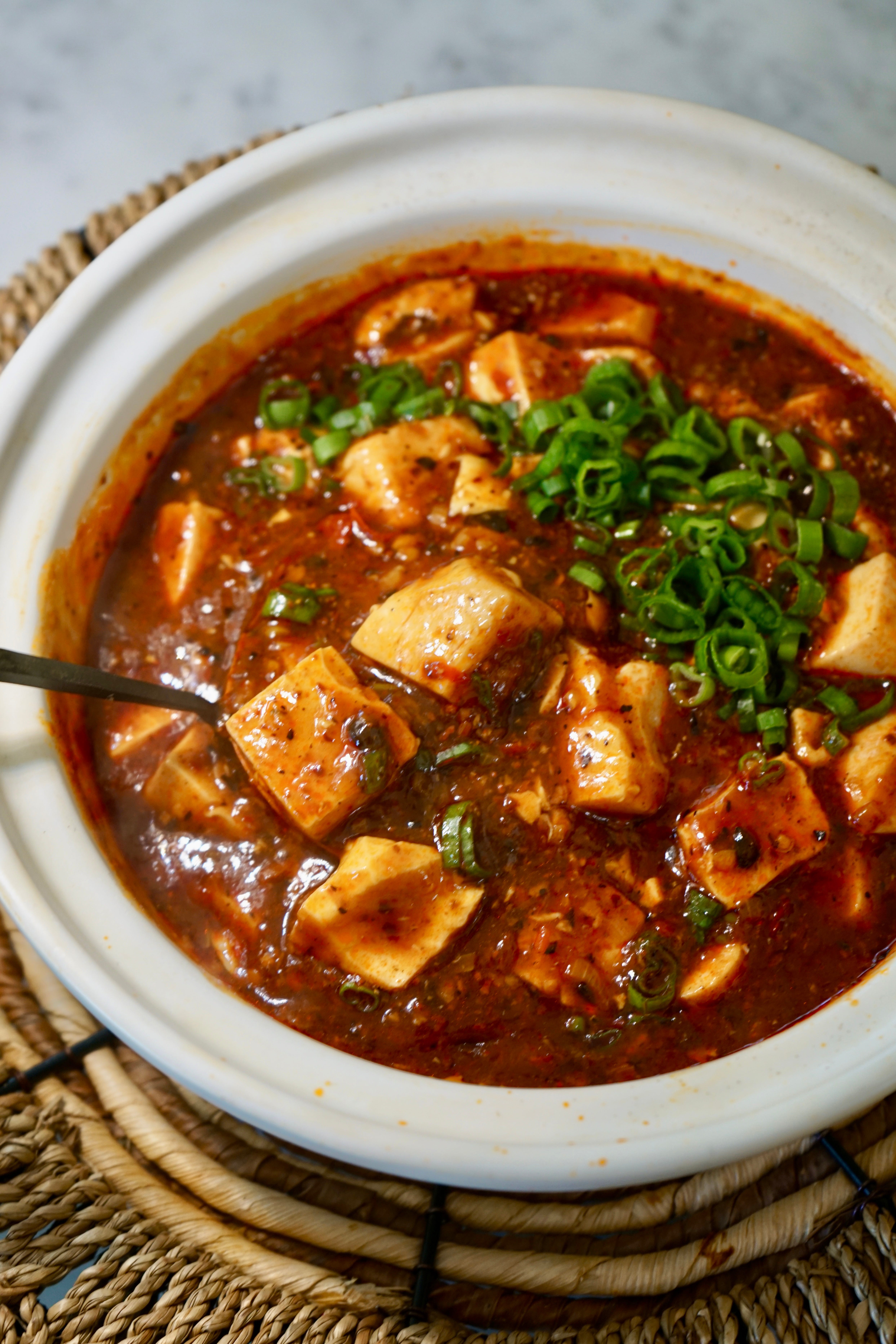
A real Sichuan-style mapo tofu—scalding hot, intensely aromatic, tender and slick with a dark crimson sheen—is a revelation that is unfortunately not easy to come by. As the name became globally famous, it also became shorthand for almost any tofu dish (or sometimes not even tofu) served in a reddish chili-based sauce with ground meat, ranging anywhere from mildly sweet to punishingly hot. Classic mapo tofu, on the other hand, is never sweet and rarely excessively spicy. Its flavor comes primarily from Pixian douban, a fava bean–based fermented chili paste that is deeply savory, fragrant, and only moderately hot, made according to strict traditional methods in the fertile heartland of Sichuan. Substituting another kind of chili sauce in mapo tofu is like drizzling canola oil over a radicchio salad that calls for extra virgin olive oil: edible, perhaps, but missing the point.
But these days, even many Chinese chefs—or dare I say, Sichuan chefs—can no longer produce a clean and classic mapo tofu. The problem is not the choice of chili bean paste, but an increasingly unquestioned belief that the dish must be finished with a large ladleful of chili oil just before serving, a practice that I suspect emerged alongside the popularity of heavily oil-based hotpot. Traditional mapo tofu, as master chef Zhang Zhongyou once explained to me in Chengdu, should have on its surface only 一綫明油: a thread-thin layer of oil that imparts sheen and seals in heat. Any more than that is unnecessary and reveals a lack of skill.
When Peter Chang demonstrated his own mapo tofu, this was precisely the point he emphasized. He said he constantly had to stop young chefs in his restaurants from drowning the dish in oil at the end. In fact, to maximize flavor and achieve the characteristic reddish sheen with the least amount of oil, he begins by frying the aromatics directly in homemade chili oil instead of plain oil, eliminating the need to add more later. He also insists on using 超級生粉—an extra refined potato starch—in place of ordinary cornstarch to thicken the sauce, producing a clearer, more translucent finish. With only a thin layer of chili oil coating the translucent thickened sauce—a technique Peter describes as 油包芡 (“oil enveloping starch”)—his mapo tofu glistens.
It is also vegetarian.
When old friends or VIP customers arrive, this is often what Peter cooks for them: simple, classic, and always a revelation.
Ingredients
1 package silken tofu (450 g)
3–5 cloves garlic, minced (about 2 tablespoons)
1 small piece of ginger, minced (about 1 tablespoon)
2 scallions, white and green parts separated
2 tablespoons Pixian doubanjiang
1 tablespoon fermented black beans (douchi), finely chopped
2–3 tablespoons unsalted chili oil
1 tablespoon Sichuan chili powder
1 tablespoon potato starch
1 teaspoon Sichuan pepper oil
1 large pinch toasted ground Sichuan pepper
Steps
Bring about 500 ml water to a boil in a small pot and add a large pinch of salt.
Cut the silken tofu into roughly 1-inch cubes (halve horizontally, then cut into a 4-by-5 grid). Gently lower the tofu into the salted water and simmer for 1 minute. This draws out excess moisture and slightly firms the tofu, helping prevent breakage later. Reserve until ready to use.
Finely chop the scallion whites and cut the greens into thin rounds for garnish.
Heat 2 tablespoons chili oil in a wok or saucepan over medium heat. Add the garlic, ginger, and scallion whites and stir-fry until fragrant. Add the doubanjiang and fry slowly, lowering the heat if necessary to prevent scorching. Add the chopped douchi and Sichuan chili powder and continue frying briefly, until the oil becomes deeply aromatic. If the mixture seems dry, add more chili oil as needed.
Pour in about 300 ml water and stir well to dissolve the seasonings into the sauce. Bring to a boil and simmer briefly.
Carefully drain the reserved tofu and gently lower it into the sauce. Simmer for about 3 minutes.
Mix the potato starch with about 1/4 cup cool water to form a thin slurry. Stir the slurry again before using, as the starch settles quickly.
Pour in about one-third of the slurry and gently push the sauce forward with a spatula or ladle to distribute it without breaking the tofu. The sauce will begin to thicken. Continue adding the slurry gradually until the sauce lightly coats the tofu. You may not need all of it, though Peter likes to err on the side of a thicker sauce.
Drizzle in the Sichuan pepper oil. Taste and adjust seasoning, though you are unlikely to need additional salt.
Sprinkle the toasted ground Sichuan pepper over the surface and garnish with scallion greens. Serve immediately in a shallow bowl or hot ceramic casserole.
Notes
About Pixian Doubanjiang
Pixian doubanjiang generally appears in two forms in Chinese supermarkets: sold in jars with visible chili oil, or wrapped in paper pouches. The paper-wrapped version is usually more heavily aged, darker in color, and often contains intact pieces of fermented fava bean. It benefits from additional chopping and longer frying in oil before use.
For this recipe, we recommend the jarred style, which is softer and easier to incorporate directly into the sauce.
About Sichuan Chili Powder
Sichuan cooking relies heavily on Erjingtiao chili pepper (二荆条) for its heady aroma, vivid color, and moderate heat. Korean-style chili powder is a decent substitute. Do not use cayenne or pizza chili flakes, or the heat would ruin your dish.
About Sichuan Pepper Powder
To make Sichuan pepper powder, toast a small handful of whole peppers in a dry pan over low heat until fragrant. Let cool completely, then grind thoroughly with a spice grinder or crush with a rolling pin. Sift through a fine strainer to remove the fibrous husks.
Store airtight and prepare in small batches whenever possible, as the fragrance dissipates quickly after grinding.
Because truly fresh Sichuan peppercorns are difficult to obtain outside China, Peter often supplements the ground pepper with a small amount of Sichuan pepper oil to reinforce the aroma and numbing quality.